The breathing stool
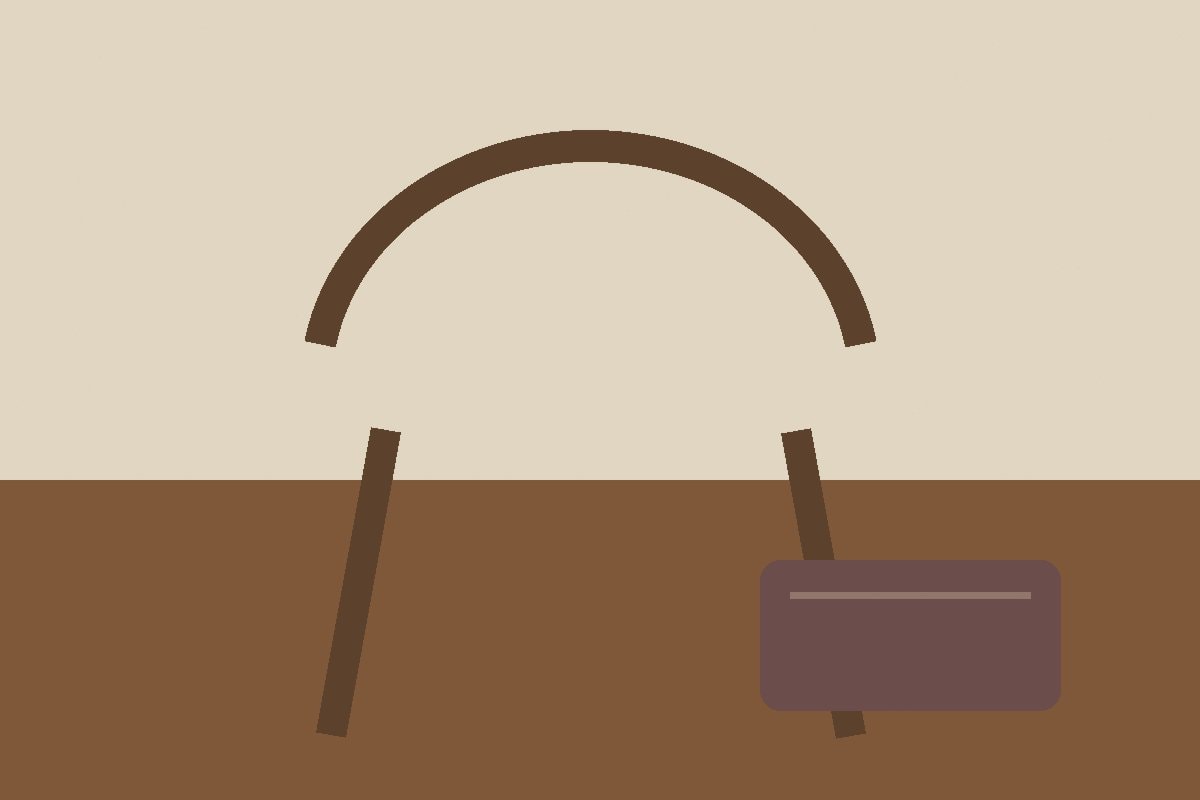
A breathing stool is a plain padded support associated with some bioenergetic sessions. It changes the relationship of the torso to gravity and can bring attention to breathing and muscular holding. This page describes its place in the tradition, not how to make or use one.
An object within a session
The stool is best understood as part of a supervised therapeutic setting. Its significance does not lie in furniture alone, but in how position, attention and relationship are organised around it. A practitioner may observe breathing, comfort and response while remaining attentive to consent and health limitations.
The Lowen Foundation overview places breathing and chronic muscular tension within bioenergetic analysis. The stool belongs to that historical vocabulary of bodily support and observation.
Nothing about the object guarantees an experience. Bodies differ, and the same position may be comfortable, unsuitable or emotionally charged for different people.
Why this page gives no plan
Dimensions, materials and assembly directions would turn a reference page into a construction manual. More importantly, a plan could imply that the practice is suitable for unsupervised experimentation. Neither implication fits the purpose of this reading room.
The meaningful questions are conceptual: why did the tradition use a support, what was the practitioner attending to, and how were breathing and tension understood? Those questions can be answered without inviting action.
The absence of instructions is therefore part of the content, not a missing section. It keeps an object in its clinical and historical context.
Breathing is both ordinary and complex
Breathing changes with movement, speech, rest, emotion, illness and environment. It is automatic but can also receive voluntary attention. That combination helps explain its importance across many body-oriented traditions.
Bioenergetic literature interpreted restricted respiration through character and muscular holding. Modern respiratory physiology uses different methods and terms. Similar subject matter does not make the explanatory systems identical.
Readers interested in that distinction can continue to The body under stress, which places breathing research beside the Lowen tradition without presenting a routine.
Safety and scope
Bioenergetic breathing and stress exercises were designed to be learned with a trained practitioner. They can be strenuous and are not suitable for everyone; anyone with a heart, lung, back or other health condition, or who is pregnant, should ask a health care provider before considering them. The NCCIH safety discussion notes that relaxation techniques can have negative effects for some people and recommends discussing health approaches with a provider.
This page offers no dimensions, construction sequence, repetitions, holding times or directions for solo practice. It also makes no claim that the stool changes a health condition. Its subject is the role of a simple support in the history and setting of bioenergetic work.
A note on language and limits
Body-oriented writing often moves between plain description and metaphor. A person literally breathes, stands and moves; a writer may then speak of grounding, holding, opening or surrender. Those later words organise experience, but they do not operate like laboratory measurements. The difference should remain visible throughout a reading of The breathing stool.
The same care applies to psychological terms. Character, narcissism, trauma, depression and spirituality can carry everyday meanings as well as specialised ones. Context decides which meaning is in play. A book’s use of a term should not become a label applied to someone who has not been assessed, and a historical proposition should not become a present-day promise.
This page therefore favours attributed verbs: an author argued, a tradition proposed, a review reported. It avoids stepwise practice and keeps personal health questions outside its scope. That discipline is not a retreat from the subject. It makes comparison possible by letting each source retain its own kind of authority. Readers can follow the internal paths to see how the central term changes across neighbouring books and methods.
A place in the reading room
The breathing stool becomes clearer when read beside neighbouring ideas rather than as an isolated doctrine. The reading room approaches each theory as a historical proposal with its own vocabulary, assumptions and limits. That approach leaves room for comparison without turning a book into a diagnosis, a promise or a set of directions.
Readers can continue with the physiology of stress, breathing and muscle tension for the closest conceptual thread, or move to Lowen’s exercise manual as a book for a different angle on the relation between bodily experience and psychological thought. The links are pathways through a literature, not a sequence of care.